3-Rail vs 4-Board Ranch Fencing: What Montgomery Property
For many Montgomery property owners, ranch fencing is both practical and visual. It helps define property boundaries, supports livestock areas, improves curb appeal, and creates a classic acreage look. Two of the most common options are 3-rail ranch fencing and 4-board ranch fencing.
Both styles can work well for rural properties, acreage homes, horse properties, and long fence runs. The right choice depends on how the fence will be used, what type of animals may be involved, how much visibility you want, and what look fits the property.
If you are comparing options for Montgomery ranch fencing, this guide explains the main differences between 3-rail and 4-board ranch fences.
What Is a 3-Rail Ranch Fence?
A 3-rail ranch fence usually includes vertical posts with three horizontal rails or boards. It is one of the most recognizable ranch fence styles and is commonly used along property frontage, driveways, pastures, and acreage boundaries.
This style creates an open, traditional ranch appearance. It marks the property line without fully blocking the view, which can be helpful on scenic acreage, wooded lots, or large open properties.
A 3-rail ranch fence is often chosen for:
- Road frontage
- Driveway entrances
- Decorative property boundaries
- Acreage homes
- Ranch-style curb appeal
- Open land where visibility matters
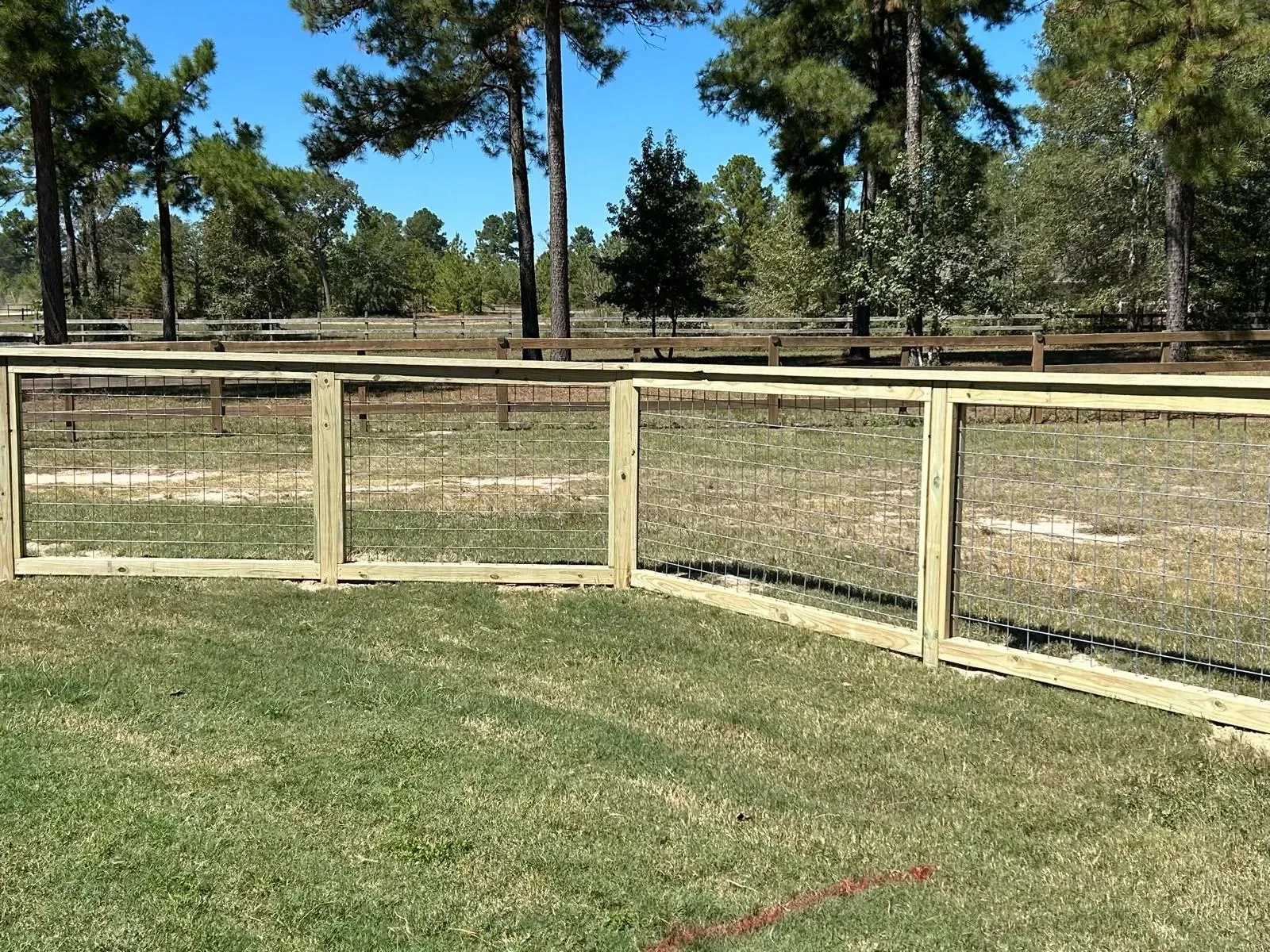
For some properties, 3-rail fencing may be paired with wire to improve animal containment.
What Is a 4-Board Ranch Fence?
A 4-board ranch fence is similar to a 3-rail fence, but it includes one additional horizontal board. That extra board gives the fence a more substantial look and can make the boundary feel stronger and more defined.
Many Montgomery property owners choose 4-board fencing when they want a more finished appearance, especially near the front of the property, around horse areas, or along long visible fence lines.
A 4-board ranch fence is often used for:
- Horse properties
- Acreage entrances
- More formal ranch boundaries
- Long front fence lines
- Pasture separation
- Properties where curb appeal is important
The extra board can improve the visual strength of the fence, but it may also increase material and labor costs compared to a 3-rail layout.
Key Takeaways
- 3-rail ranch fencing gives Montgomery properties a more open, classic ranch look.
- 4-board ranch fencing creates a stronger visual boundary and a more finished appearance.
- Either fence style may need wire backing depending on livestock, pets, or property use.
- 4-board fencing may cost more because it uses more material, but it can improve curb appeal near entrances and road frontage.
- Gate placement, maintenance, and animal safety should be considered before choosing between 3-rail and 4-board fencing.
This video provides a visual example of a four-board style fence. Use it as a general reference only; Montgomery properties may require different post spacing, gate planning, wire backing, or installation details based on acreage, animals, and site conditions.
Appearance and Curb Appeal
The biggest visible difference between 3-rail and 4-board fencing is density. A 3-rail fence looks more open and minimal. A 4-board fence looks fuller and more substantial.
For a property where the goal is a simple ranch appearance, 3-rail may be enough. For properties where the fence is a major part of the front entrance or curb appeal, 4-board may provide a more polished look.
Montgomery properties with long driveways, gated entrances, or visible road frontage may benefit from the stronger appearance of 4-board fencing. On larger properties where long runs matter more than appearance, 3-rail may be more cost-effective.
Strength, Livestock Use & Property Boundaries
Neither 3-rail nor 4-board fencing should be chosen based on appearance alone. If livestock will be involved, the fence needs to be planned for containment and safety.
A 4-board fence may provide a more visible physical barrier than a 3-rail fence, but either style may need wire depending on the animals. Horses, cattle, goats, dogs, or other animals may require different fence details.
For livestock areas, property owners often consider:
- Board spacing
- Post spacing
- Wire backing
- No-climb wire
- Gate placement
- Corner strength
- Fence height
- Visibility
Ark Fence Company’s ranch and farm fencing options can help property owners compare layouts based on animals, acreage, and fence function.
Maintenance Considerations for Montgomery Acreage
Montgomery properties may deal with moisture, wooded lots, storms, and shifting ground. These conditions can affect fence posts, rails, and gates over time.
A 4-board fence has more wood than a 3-rail fence, which means there is more material to maintain. However, it may also provide a stronger visual barrier and a more finished appearance.
Maintenance considerations include:
- Wood treatment or staining
- Board replacement
- Post stability
- Gate adjustment
- Wire tension
- Storm damage repair
- Vegetation near fence lines
For long rural fence runs, maintenance planning is important. Even a durable fence needs periodic inspection, especially after storms or heavy rain.
Which Fence Is Better for Horses or Cattle?
For horses, visibility and safety matter. A 4-board fence may create a more visible boundary, but many horse properties also use wire or no-climb wire depending on the layout. A properly planned horse fence should reduce sharp edges, weak points, and areas where animals may get caught.
For cattle, strength and containment are key. Depending on the property, a wood-and-wire layout may be more practical than boards alone. Cattle fencing often needs to handle pressure from animals and long-term outdoor exposure.
For mixed-use acreage, the best choice may include boards along visible frontage and wire-supported fencing around livestock areas.
When to Add Wire to a Ranch Fence
Wire can improve the function of both 3-rail and 4-board fencing. It is often added when the fence needs to contain animals, improve security, or close open gaps between boards.
Wire may be recommended for:
- Horses
- Cattle
- Dogs
- Perimeter boundaries
- Long fence runs
- Pasture areas
- Rural properties with mixed use
No-climb wire is especially useful for animal safety and containment. Wood-and-wire fencing can provide the best mix of ranch appearance and practical function.
Gates and Access Points
Ranch fencing should be planned with gates from the beginning. Driveway entrances, pasture gates, service access, equipment access, and livestock movement all affect the fence layout.
For acreage properties, driveway gates for acreage properties may include ranch entry gates, ornamental iron gates, automatic openers, keypad access, or solar gate openers.
A gate that is not planned correctly can create long-term issues with access, sagging, or daily use. Proper gate placement helps the entire fence system work better.
Repair or Replace an Existing Ranch Fence?
If an existing 3-rail or 4-board fence is damaged, the next step depends on the condition of the full fence line. A few broken boards or leaning posts may be repairable. Widespread rot, failing posts, storm damage, or repeated leaning sections may call for replacement.
For damaged ranch fencing, Ark Fence Company can help with fence repair in Montgomery TX and explain whether targeted repair or replacement is the better long-term choice.
Get Help Planning a Ranch Fence in Montgomery
Both 3-rail and 4-board ranch fencing can be good options for Montgomery properties. A 3-rail fence is open, classic, and often cost-effective for long runs. A 4-board fence offers a fuller, more finished appearance and may be preferred for front fence lines, horse properties, and visible areas.
Need help choosing between 3-rail and 4-board fencing? Call for Ranch Fencing.